Fudan University
Ph.D. Student in Atmospheric Sciences
Department of Atmospheric and Oceanic Sciences.
GPA: 3.6/4.
Research direction:
AI-driven ocean biogeochemical modeling and applications.
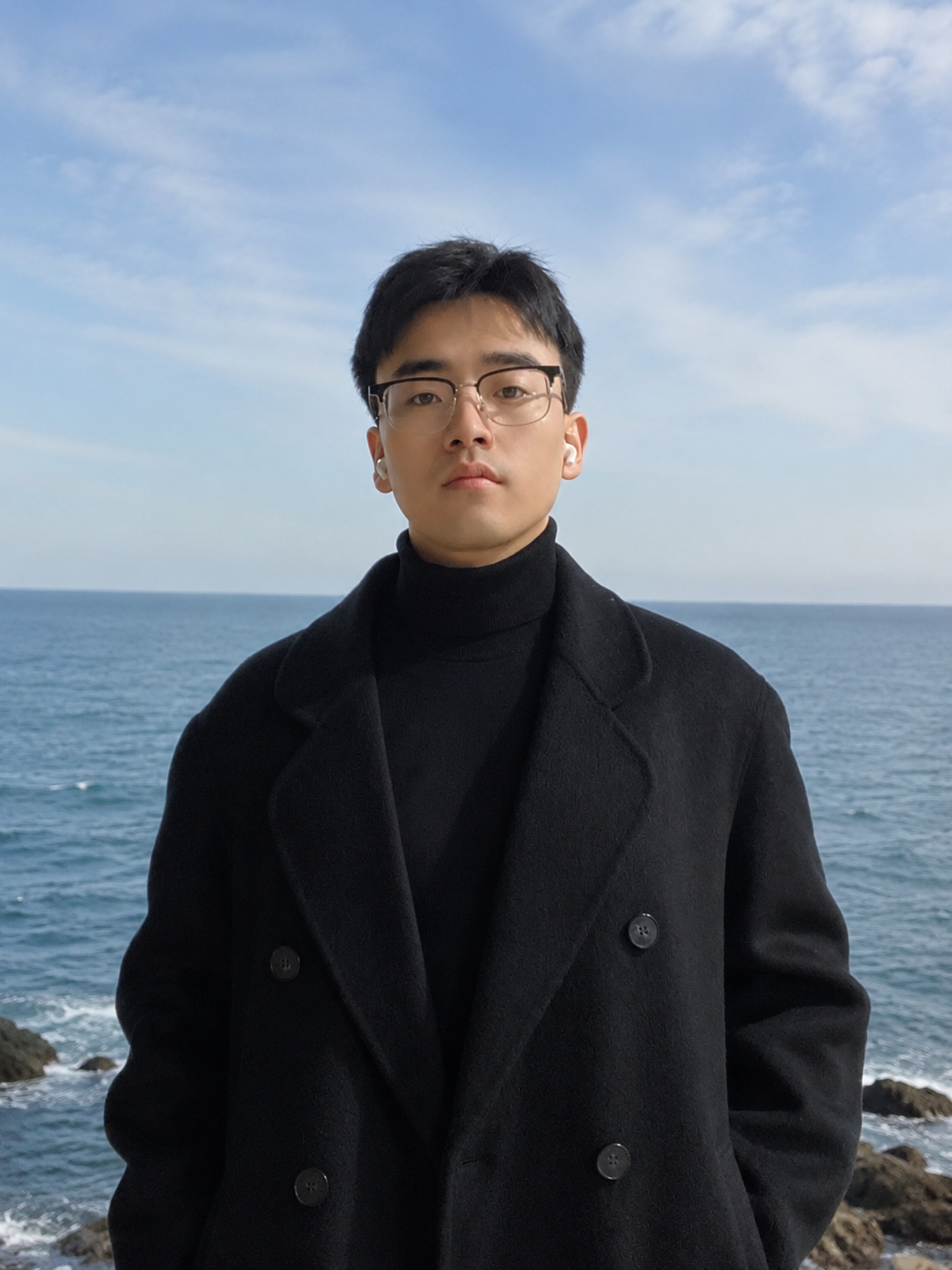
Ph.D. Student in Atmospheric Sciences
I develop physically interpretable machine-learning frameworks for reconstructing global ocean biogeochemical fields, with a focus on dissolved oxygen, surface-ocean pCO2, ocean deoxygenation, and carbon-oxygen coupling under climate change.


I am a Ph.D. student in Atmospheric Sciences at Fudan University. My research interests include ocean spatiotemporal data modeling, marine biogeochemistry, dissolved oxygen and pCO2 reconstruction, ocean deoxygenation, and machine learning.
Ph.D. Student in Atmospheric Sciences
Department of Atmospheric and Oceanic Sciences.
GPA: 3.6/4.
Research direction:
AI-driven ocean biogeochemical modeling and applications.
M.S. in Resources and Environment
GPA: 3.77/4.
Research direction: ocean spatiotemporal data mining.
B.S. in Geographic Information Science
School of Oceanography and Space Informatics. Ranked 3/47 and recommended for graduate admission.
GEOXYGEN, Argo dissolved oxygen observations, and long-term reconstruction of global ocean oxygen change.
FDU-BTR / OceanBTR, surface-ocean pCO2 reconstruction, and air-sea CO2 flux assessment.
BTR residual learning, region-aware modeling, uncertainty diagnosis, and physically meaningful machine learning.
Oxygen minimum zones, ocean deoxygenation, carbon sinks, and thermal-carbon-oxygen coupling mechanisms.
The GEOXYGEN global long-term dissolved oxygen dataset paper was published in Earth System Science Data.
Contributed to the dissolved oxygen analysis section of the Global-Scale Sustainable Development Monitoring Report 2025.
Presented at national conferences related to coastal remote sensing, geographic information science, and ocean data assimilation; served as a reviewer for Earth System Science Data.
Wang, Z., Fu, W., Xue, C., and Wang, G. (2026). GEOXYGEN: a global long-term dissolved oxygen dataset based on biogeochemistry-aware machine learning framework and multi-source observations. Earth System Science Data, 18, 3125-3146.
Wang, Z., Xue, C., and Ping, B. (2024). A reconstructing model based on time-space-depth partitioning for global ocean dissolved oxygen concentration. Remote Sensing, 16, 228.
Xue, C., Wang, Z., Yue, L., et al. (2024). A global four-dimensional gridded dataset of ocean dissolved oxygen concentration retrieval from Argo profiles. Geoscience Data Journal, 11(4), 775-789.
Yue, L., Xue, C., Wang, Z., and Niu, C. (2023). An Iterative Space-quality Interpolation Method for Marine Dissolved Oxygen Data Observed by Argo Floats. Journal of Geo-Information Science, 22.
Xue, C., Wang, Z., and Yue, L. Method for constructing an ocean dissolved oxygen concentration reconstruction model based on Argo temperature and salinity profiles. CN: 202310062810.9.
Xue, C., Yue, L., and Wang, Z. Method for constructing an Argo-based ocean dissolved oxygen spatial grid model. CN: 202211383915.6.
Developed and released the GEOXYGEN global long-term dissolved oxygen dataset.
Topics: dissolved oxygen, gridded ocean data, biogeochemistry-aware machine learning
Dataset Related postContributed to the writing of the dissolved oxygen analysis section for the Global-Scale Sustainable Development Monitoring Report 2025.
Topics: sustainable development monitoring, dissolved oxygen analysis, ocean data products
Reports Download reportUpdated and validated remote-sensing analysis datasets for global ocean surface environmental variables, supported batch processing, and integrated ocean spatiotemporal mining methods into a monitoring system.
Methods: remote sensing, dataset validation, batch processing, system integration
Global Ocean Dissolved Oxygen Product and Deoxygenation Mechanism Analysis
Built Oracle-based ocean observation databases, developed machine-learning reconstruction models, produced a monthly global gridded dissolved oxygen dataset, and analyzed OMZ evolution and cross-variable relationships.
Remote Sensing Monitoring System for Global Ocean Anomaly Processes
Contributed to marine multi-variable spatiotemporal datasets, dataset validation, batch processing workflows, method integration, and monitoring system development.
Python, MATLAB, SQL, Oracle, and spatial data processing.
Machine learning and deep learning methods for ocean data reconstruction and analysis.
ArcGIS, QGIS, ENVI, GIS spatial analysis, and remote sensing image processing.
CET-6; National Computer Rank Examination Level 2.
I enjoy badminton, running, hiking, and fitness training.
Efficiency is doing things right; effectiveness is doing the right things. -Peter F. Drucker
Email:
Institution: Department of Atmospheric and Oceanic Sciences, Fudan University
Location: Shanghai, China